


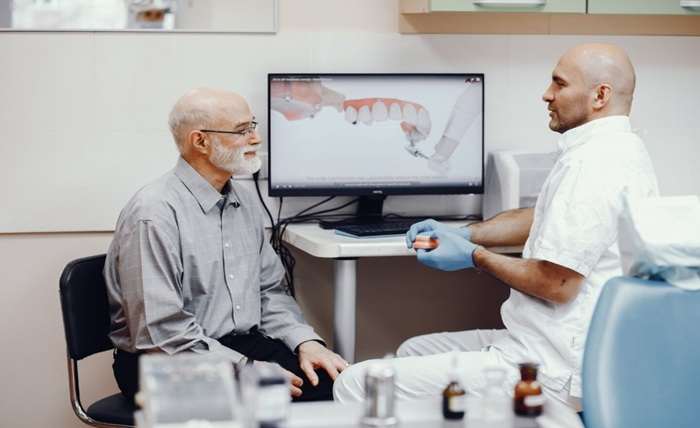
Whether the trip is worth it depends on four things — cost, quality, risk and logistics — and an honest answer requires taking all four seriously rather than leading with the first. For an increasing number of patients, particularly in the UK, Germany and the Netherlands where implant pricing is highest, the answer is yes, but with a condition attached: it is worth it for patients who prepare properly. This guide sets out the case both for and against, and walks through what implant installation actually involves from first email to final crown.
The Financial Case
| Country / Region | Average Cost | Notes |
| UK (single implant, all-in) | £2,000 – £4,500 | Implant, abutment, and crown; private treatment only |
| Germany (single implant) | €1,800 – €3,500 | Statutory insurance covers very little of the cost |
| Netherlands (single implant) | €1,800 – €3,200 | Private market; NHS equivalent does not cover implants |
| Turkey (Dental Harmony Turkey) | £460 – £1,000 | All-inclusive: implant, abutment, and final ceramic crown |
Four implants illustrate the scale better than one does: against UK private rates that is a saving of £3,600–13,200 before flights and hotels are deducted. On full-arch cases — All-on-4 or All-on-6 — the difference runs to £4,500–13,000 per arch. This is not a marginal advantage that disappears once travel costs are counted; it holds comfortably even after them.
The Risks, Stated Plainly
Distance from aftercare: If a complication develops once you are home, the treating clinic is a flight away. Two things mitigate this in practice — choosing a clinic with a genuine remote aftercare protocol, and briefing your local dentist before you travel so that someone nearby understands the case if a minor issue arises during healing.
Implant brand and warranty: Turkish clinics do not all use the same system, and not every system carries a warranty that means anything outside Turkey. Get the brand confirmed in writing before booking. Premium systems such as Straumann and Nobel Biocare come with international warranty documentation that can be accessed through certified practices at home.
Two-trip commitment: Implant treatment needs at least two visits, typically 3–6 months apart — one for placement, one for the definitive restoration. Some patients only discover this after making an initial enquiry, having budgeted for a single trip. Plan for both from the start.
Variability between clinics: Standards vary in Turkey exactly as they vary everywhere. The reliable selection criteria are a clinic’s track record with international patients, the implant systems it uses, and how clear it is about pricing and aftercare.
The Case in Favour
- Savings of 50–65% per implant against UK private rates, multiplied across every unit
- The same internationally certified implant systems used at established Antalya clinics
- A well-organised sector with English-language coordination built in rather than improvised
- High annual case volumes producing surgical teams who do this work constantly
- Recovery in a resort environment rather than between appointments at home
- Waiting times measured in days — most patients are treated within 48 hours of landing
How Implant Installation Works: Step by Step
- Pre-travel consultation — Existing X-rays or OPG scans are submitted remotely, and the clinic returns a provisional treatment plan and cost estimate before travel is booked.
- Arrival and 3D CT scan — A cone beam scan maps bone density, nerve positions and sinus anatomy in three dimensions.
- Preparatory procedures — Extractions, bone grafts or sinus lifts are completed; some of this work requires its own healing period before implants can go in.
- Implant placement — Under local anaesthetic, a small incision is made in the gum and the titanium post is placed into the jawbone. The site is closed and left to integrate. Around 30–60 minutes per implant.
- Osseointegration — The post fuses with surrounding bone over 3–6 months, with a temporary crown or healing cap in place during that time.
- Abutment placement — Once integration is confirmed on X-ray, the connecting abutment is fitted to the post.
- Crown fitting — An all-ceramic crown, usually zirconia or E-max, is fabricated and permanently cemented, then adjusted for bite and polished.
Combining Implants With Other Work
Most patients travelling for implants are not travelling only for implants. Crowns, veneers or whitening are commonly folded into the same trip, which is efficient use of travel already paid for. For the ceramic side of a combined plan, Dental Harmony Turkey’s zirconia crown antalya service provides full-ceramic, metal-free crowns shade-matched to the surrounding natural teeth, so the implant work and the cosmetic work are completed within the same visit.
Who Benefits Most
- Patients needing several implants, where UK pricing becomes prohibitive by multiplication
- Full-arch cases where UK per-arch pricing typically exceeds £10,000
- Patients on long NHS waiting lists, or those for whom NHS implants are not available at all
- Anyone already planning a broader smile makeover who can consolidate everything into one trip
Final Thoughts
For the patient who researches properly, selects a verified clinic, understands that this is a two-trip commitment and plans for aftercare in advance, Turkey for dental implants is worth it. The savings are real, the standards at established Antalya clinics are high, and the sheer volume of documented international patient experience means there is very little left to guess about. Dental Harmony Turkey is an established Antalya Dental Clinic treating implant cases for UK and European patients, with itemised pricing and structured coordination from first enquiry to final restoration.